 Skip to content


The Surprising Health Benefits of Onions: Fact vs. Myth
Onions (Allium cepa) are among the most versatile and widely cultivated vegetables in the world. Beyond adding rich flavor to culinary dishes globally, onions have been revered in traditional wellness for centuries.
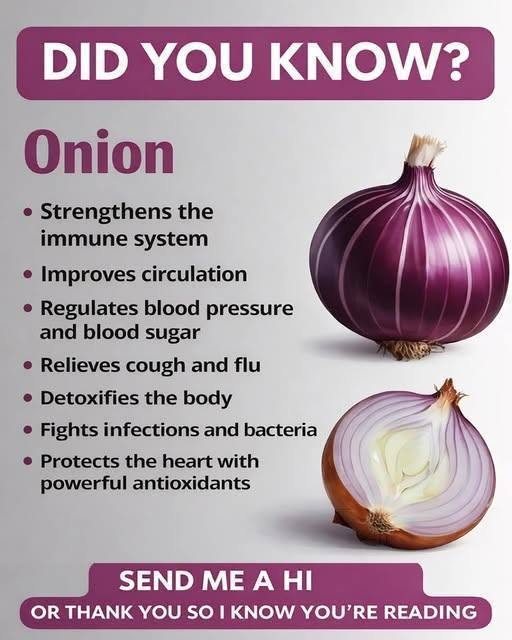
A viral health graphic highlights several popular claims about onions, asking readers:
“DID YOU KNOW? Onion:”
Strengthens the immune system
Improves circulation
Regulates blood pressure and blood sugar
Relieves cough and flu
Detoxifies the body
Fights infections and bacteria
Protects the heart with powerful antioxidants
While onions are undeniably a nutritional superfood packed with plant compounds, evaluating these claims with scientific context helps separate proven health benefits from social media oversimplification.
Below, we break down the real nutritional science behind onions and how they support overall health.
1. Packed with Heart-Healthy Antioxidants
Onions are exceptionally rich in quercetin, a potent flavonoid antioxidant that helps fight cellular inflammation.
-
Cardiovascular Support: Studies suggest quercetin helps reduce high blood pressure and lower levels of LDL (“bad”) cholesterol.
-
Circulation Booster: Compounds in onions help prevent blood platelet clumping, supporting healthy circulation and overall heart function.
2. Blood Sugar Regulation & Metabolic Support
For individuals managing blood sugar levels, onions are a great low-glycemic addition to daily meals.
-
Chromium & Sulfur: Onions contain sulfur compounds (such as S-methylcysteine) and chromium, which assist in regulating blood sugar and enhancing insulin sensitivity.
-
Clinical Evidence: Studies show that consuming raw red onions can help lower fasting blood glucose levels in people with type 2 diabetes.
3. Antimicrobial & Immune System Properties
Onions contain natural sulfur compounds and Vitamin C, both of which support immune defense.
-
Antibacterial Action: Test-tube studies indicate that onion extracts can inhibit the growth of harmful bacteria like E. coli and S. aureus.
-
Respiratory Comfort: While warm onion tea or honey-soaked onion syrups are traditional folk remedies for soothing sore throats and coughs, they serve as gentle comfort measures rather than cures for viral infections like the flu.
Fact-Checking Common Wellness Claims
| Claim | Scientific Reality |
| “Protects the Heart” | TRUE: Rich in quercetin and antioxidants that support arterial health and blood pressure. |
| “Regulates Blood Sugar” | TRUE: Sulfur compounds and low glycemic index aid insulin regulation. |
| “Fights Bacteria” | PARTIALLY TRUE: Antimicrobial in lab settings; supports immunity when eaten. |
| “Detoxifies the Body” | MYTH: Your liver and kidneys handle detoxification, though onions support overall metabolic health. |
Simple Ways to Maximize Onion Health Benefits
-
Eat Outer Layers Wisely: The highest concentration of quercetin and flavonoids sits in the outer flesh layers just beneath the papery skin. Avoid peeling off too many layers!
-
Mix Raw and Cooked: Enjoy raw red onions in salads for maximum Vitamin C, and cooked onions in soups and stews for heat-stable antioxidants.
-
Pair with Garlic: Combining alliums like garlic and onion creates a rich, synergistic blend of sulfur compounds for immune support.
Conclusion
Onions are far more than a basic cooking base—they are nutritional powerhouses loaded with antioxidants, fiber, and heart-healthy compounds. Adding a daily serving of red, yellow, or white onions to your diet is an easy, delicious way to invest in long-term wellness!
Frequently Asked Questions (FAQ)
Are red onions healthier than yellow or white onions?
Red onions tend to have higher overall antioxidant levels—specifically anthocyanins (which give them their rich red-purple color)—while yellow onions contain higher amounts of total sulfur compounds.
Does cooking onions destroy their nutrient value?
While heat slightly reduces Vitamin C content, cooking actually makes certain flavonoids and antioxidants easier for your body to absorb!