 Skip to content


The Bee vs. Fly Metaphor: Why You Should Stop Arguing Online
In the age of social media comment sections, online debates, and endless arguments over opinions, conserving mental energy has become a crucial life skill. Motivational graphics and philosophical memes frequently remind us that trying to change everyone’s mind is a losing battle.
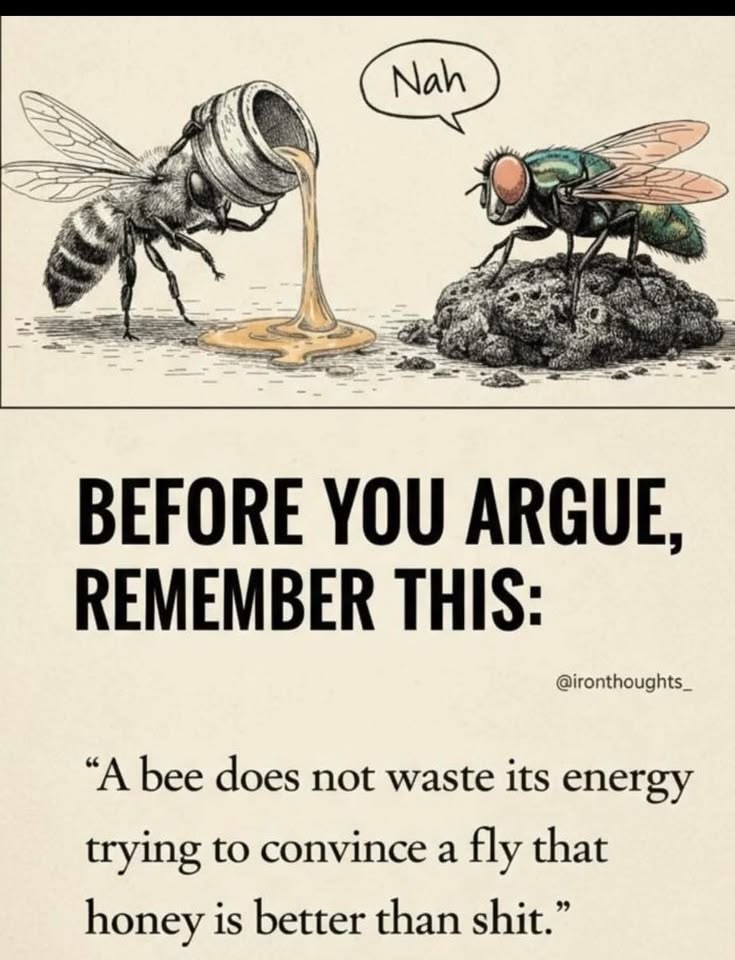
One widely shared illustration featuring a honeybee pouring honey and a housefly sitting on a pile of waste highlights this concept with a blunt quote:
“BEFORE YOU ARGUE, REMEMBER THIS:
‘A bee does not waste its energy trying to convince a fly that honey is better than shit.'”
Though direct and provocative, the underlying message resonates deeply with anyone who has ever found themselves trapped in a fruitless online argument.
In this guide, we break down the meaning of this famous metaphor, explore the psychology of futile debates, and offer practical strategies for protecting your time and peace of mind.
Deconstructing the Image: The Core Message
What makes this graphic so impactful across social media platforms?
                 [ THE BEE vs. FLY PARADOX ]
                              |
      --------------------------------------------------
     |                                                  |
 [ THE BEE ]                                        [ THE FLY ]
 • Produces honey                                   • Attracted to waste
 • Focuses on sweet, productive tasks              • Driven by entirely different instincts
 • Doesn't waste breath negotiating                 • Rejects honey ("Nah")
1. Radically Different Values
The bee and the fly live in completely different worlds. What represents nourishment, value, and sweet reward to the bee (honey) holds no interest for the fly, which is naturally drawn to decay and waste.
2. The Futility of Persuasion
When two parties operate under fundamentally incompatible worldviews, values, or goals, attempting to convince the other person through sheer debate is a waste of effort. The fly’s simple response—“Nah”—captures the ultimate outcome of most stubborn internet debates.
Comparative Breakdown: Wasting Energy vs. Conserving Peace
| Scenario | Wasting Energy (The Argument) | Conserving Energy (The Bee Approach) |
| Reaction to Opposing Views | Typing long responses to convince someone | Muting, scrolling past, or disengaging |
| Focus of Effort | Trying to fix someone else’s perspective | Creating value and building your own work |
| Emotional Result | Frustration, fatigue, and stress | Clarity, peace of mind, and productivity |
Psychological Insights: Why online Arguments Fail
Why is it so rare for online debates to actually change anyone’s mind?
1. Confirmation Bias & Perception Filters
People naturally seek out and defend information that aligns with their pre-existing beliefs. When presented with counter-arguments, humans often dig in their heels—a psychological phenomenon known as the backfire effect.
2. Energy Misallocation
Your time and emotional energy are finite resources. Every minute spent arguing with someone who has no intention of understanding your point is a minute taken away from personal growth, creative work, or meaningful relationships.
Practical Tips for Avoiding Unproductive Arguments
-
Set the “One-Response” Rule: If you feel the need to clarify a statement, post it once clearly, then walk away. Avoid getting pulled into endless back-and-forth threads.
-
Recognize Bad-Faith Debaters: If the other person is resorting to insults or ignoring logic, recognize that they aren’t looking for genuine discussion.
-
Protect Your Focus: Adopt the bee’s mindset—focus on gathering nectar and making sweet honey rather than debating those who prefer garbage.
Conclusion
The metaphor of the bee and the fly serves as a vivid reminder that not every argument deserves your time or attention. Next time you feel tempted to engage in a toxic comment thread, remember: save your energy for what actually matters!
Frequently Asked Questions (FAQ)
Who said the quote “A bee doesn’t waste its energy trying to convince a fly…”?
While frequently shared across social media and attributed to various motivational speakers, the quote functions as a popular modern internet proverb rather than a verified historical quotation.
What is the main takeaway of the bee and fly meme?
The primary lesson is to protect your mental health and time by recognizing when an argument is futile rather than trying to force someone to adopt your perspective.