 Skip to content

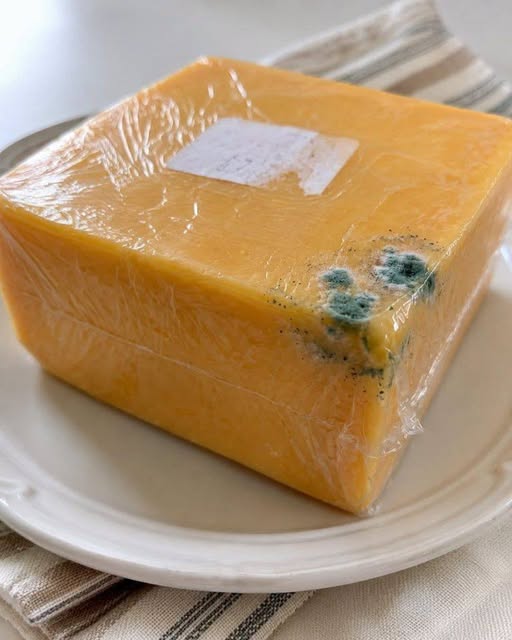

Mold on Cheese: When Is It Safe to Cut Off and When Should You Toss It?
Discovering a spot of blue or green mold on a block of cheese in your refrigerator is a common kitchen dilemma. While your instinct might be to toss the entire block directly into the trash, food safety guidelines from food scientists and agricultural extension services reveal that whether cheese can be saved depends entirely on its texture and moisture content.
Understanding how mold spreads through dairy products allows you to practice food safety while preventing unnecessary food waste and saving money on grocery bills!
Below, we break down the rules for salvaging hard cheeses, identifying dangerous soft cheeses, and storing cheese correctly to maximize shelf life.
The Hard Cheese vs. Soft Cheese Rule
Mold requires moisture, air, and organic material to grow. Because mold hyphae (root-like structures) penetrate dense foods differently than soft, wet foods, food safety experts divide cheese into two clear categories:
1. Hard and Semi-Hard Cheeses (SAFE to Salvage)
-
Examples: Cheddar, Swiss, Parmesan, Gouda, Colby, and Provolone.
-
Why it’s safe: Hard cheeses have low moisture content and a dense, compact physical structure. This prevents mold roots and invisible spores from penetrating far beneath the visible surface spots.
-
How to cut it: Cut off at least 1 inch (2.5 cm) around and below the mold spot. Keep the knife blade clean and out of the mold itself to prevent cross-contamination. Re-wrap the remaining clean cheese in fresh parchment paper or plastic wrap.
2. Soft, Shredded, or Sliced Cheeses (MUST Toss Out)
-
Examples: Cottage cheese, cream cheese, ricotta, Brie, Camembert, shredded cheese bags, and sliced sandwich cheeses.
-
Why it’s dangerous: High moisture levels and porous textures allow mold roots to spread rapidly throughout the entire product. Additionally, harmful bacteria like Listeria, E. coli, or Salmonella can easily grow alongside mold in high-moisture dairy environments.
Essential Food Safety Guidelines for Cheese
| Cheese Type | Visible Mold Action | Reason |
| Hard Cheese (Block) | Cut off 1 inch around/below mold | Dense structure blocks deep root penetration |
| Shredded / Grated Cheese | Discard entire package | Mold spores contaminate the whole bag rapidly |
| Soft / Creamy Cheese | Discard entire package | High moisture content allows rapid microscopic spreading |
| Sliced Cheese | Discard entire package | Spores spread easily between thin layers |
How to Prevent Mold Growth on Cheese
-
Ditch Airtight Plastic Wrap Long-Term: Plastic wrap traps excess moisture against the surface of the cheese, creating an ideal environment for mold spores to thrive.
-
Use Cheese Paper or Wax Paper: Wrap hard cheeses tightly in breathable cheese paper or parchment paper, then place them loosely inside an unsealed plastic container or bag. This allows the cheese to “breathe” without drying out.
-
Store in the Crisper Drawer: The refrigerator vegetable/crisper drawer maintains a stable temperature and humidity level, protecting dairy items from cold drafts.
-
Handle with Clean Utensils: Avoid touching the main block of cheese with bare hands, as natural skin oils and bacteria accelerate spoilage.
Conclusion
Managing kitchen waste doesn’t mean compromising on food safety. By following the 1-inch cutting rule for dense hard cheeses like Cheddar and promptly discarding soft dairy products at the first sign of spoilage, you can keep your kitchen safe, efficient, and cost-effective!
Frequently Asked Questions (FAQ)
What happens if you accidentally eat moldy cheese?
In most cases involving small amounts of common mold on hard cheese, stomach acid neutralizes minor exposure without issue. However, consuming moldy soft cheese can lead to digestive distress or allergic reactions.
Is the mold on blue cheese different from unwanted fridge mold?
Yes! Intentional mold varieties used in cheesemaking (such as Penicillium roqueforti or Penicillium camemberti) are specially cultivated, food-safe strains. Unwanted wild molds appearing on plain cheeses are uncultivated and potentially produce harmful mycotoxins.