 Skip to content

Growth Happens in the Quiet: Why Rest Is Essential to Rise
In a high-pressure culture that glorifies constant hustle and non-stop output, taking time off often gets wrongly labeled as laziness. We are pushed to work harder, run faster, and push through exhaustion. However, continuous pressure without recovery leads straight to burnout, not progress.
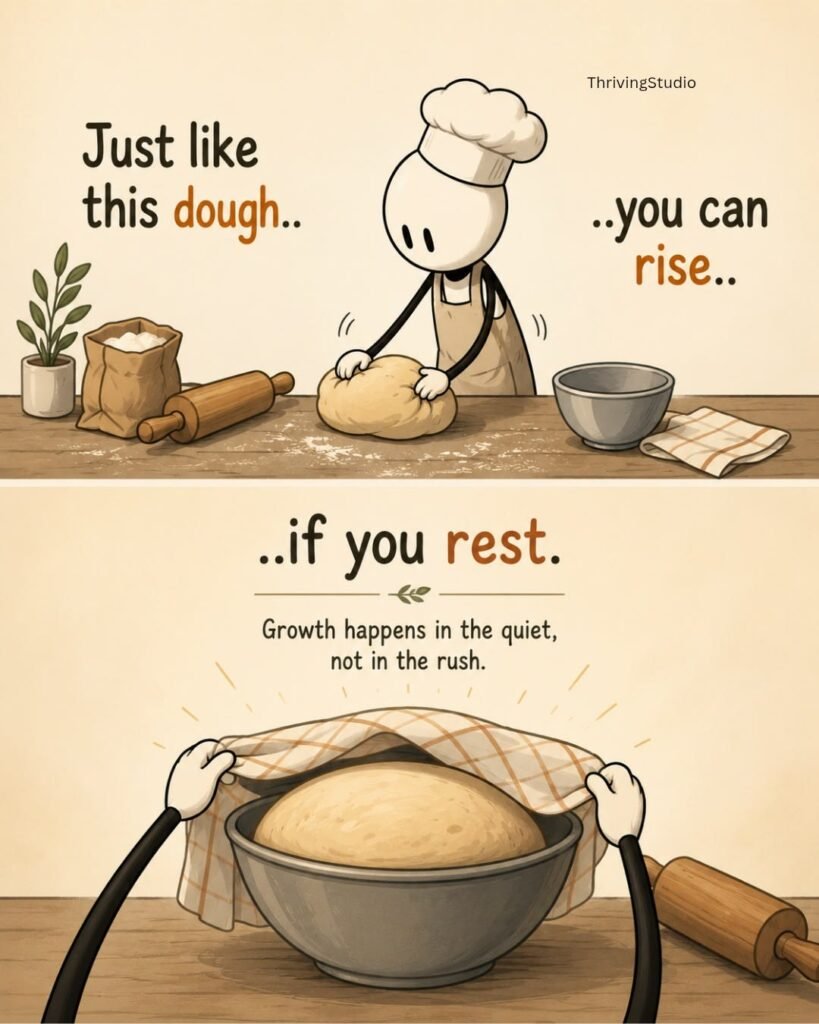
A heartwarming viral illustration by ThrivingStudio captures this truth using a simple baking metaphor:
“Just like this dough… you can rise… if you rest.”
“Growth happens in the quiet, not in the rush.”
The illustration shows a stick-figure baker actively kneading dough on a flour-dusted table in the top panel. In the bottom panel, the baker gently uncovers a bowl where the dough has expanded into a full, rounded shape after being left alone in peace.
This visual metaphor offers an important lesson: just as dough requires time to ferment and rise after being worked, human beings need deliberate rest to process, rebuild, and reach their full potential.
In this guide, we break down the visual symbolism of this illustration, explore the science behind rest and performance, and share actionable strategies to optimize your recovery time.
Deconstructing the Image: The Metaphor of Dough
What makes this visual metaphor so comforting and memorable?
                     [ THE TWO STAGES OF RISE ]
                                 |
      -------------------------------------------------------
     |                                                       |
 [ KNEADING (EFFORT) ]                        [ RESTING (GROWTH) ]
 • Active work & tension                      • Quiet fermentation
 • Shaping the material                       • Natural expansion
 • Necessary, but incomplete                  • Where real rising occurs
1. Kneading the Dough (The Input Phase)
Kneading creates gluten structure through physical effort. In life, this represents studying, training, working, and putting in the hard hours. While necessary to build strength, kneading alone never makes the bread rise—if you keep kneading endlessly without stopping, the dough becomes tough and ruined.
2. Allowing the Dough to Rest (The Expansion Phase)
When covered and left undisturbed, yeast releases gas and expands the structure from within. In human development, rest is when your brain consolidates learning, muscle fibers repair, and creative ideas take shape. Real growth happens when you step away.
Comparative Breakdown: Constant Hustle vs. Strategic Rest
| Metric | Constant Hustle (No Rest) | Strategic Rest (Balanced Growth) |
| Physical Impact | Chronic fatigue, high cortisol, burnout | Energy restoration, physical recovery, longevity |
| Cognitive Performance | Brain fog, frequent mistakes, creative blocks | Sharp focus, improved memory, innovative thinking |
| Emotional State | Irritability, anxiety, overwhelm | Inner peace, emotional resilience, steady motivation |
| Long-Term Trajectory | Diminishing returns & sudden crashes | Sustainable progress & continuous compound growth |
The Science: Why Rest Drives Peak Performance
Why is dynamic rest an active biological requirement rather than passive downtime?
1. Neurological Consolidation
During periods of rest and deep sleep, your brain’s default mode network (DMN) becomes active. This is when the brain synthesizes complex information, connects disparate concepts, and transfers short-term experiences into permanent long-term memory.
2. Muscle Growth and Cellular Repair
In physical fitness, working out creates micro-tears in muscle tissue. The actual building of stronger muscle tissue occurs exclusively during recovery and sleep. Pushing without rest leads to breakdown rather than strengthening.
Practical Ways to Integrate Rest for Better Results
-
Schedule Rest Like Appointments: Treat rest as non-negotiable calendar events rather than “leftover time” at the end of a busy day.
-
Disconnect from Constant Inputs: Give your mind quiet moments free from phone screens, podcasts, or notifications to let your thoughts settle naturally.
-
Practice Active Recovery: Engage in low-stress, restorative activities like light walking, gentle stretching, journaling, or spending quiet time in nature.
Conclusion
You don’t need to feel guilty for pausing. Just as bread dough must sit in a warm, quiet space to fulfill its potential, your biggest leaps in growth will come after giving yourself permission to rest. Remember: Growth happens in the quiet, not in the rush.
Frequently Asked Questions (FAQ)
What is the main message behind the “dough” resting image?
The image uses baking as an analogy to show that hard work (kneading) must be paired with quiet recovery (resting) for real personal growth and expansion to happen.
How do I stop feeling guilty when taking a break?
Reframe rest as an essential component of productivity rather than its opposite. Without deliberate recovery, your performance, health, and creativity naturally decline.