 Skip to content

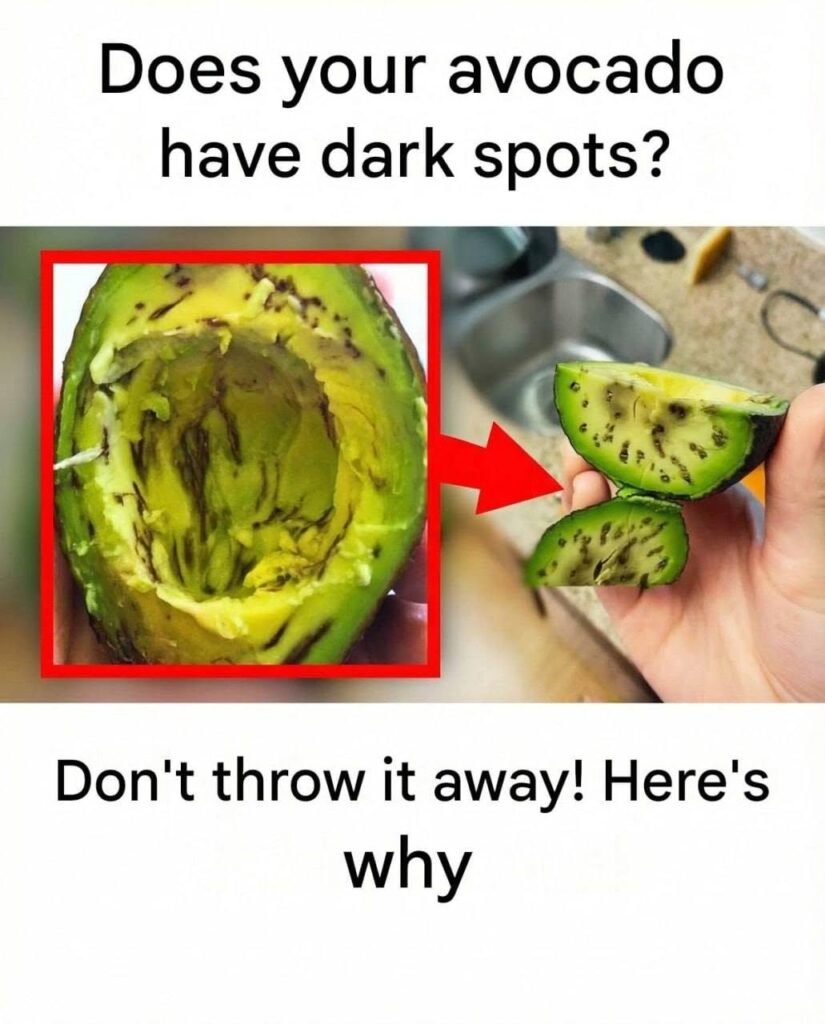

Few kitchen disappointments rival slicing open a fresh avocado only to find dark brown spots, speckled dots, or stringy dark fibers running through the creamy green flesh. It leaves many home cooks asking the same question: Has this avocado gone bad, or is it still safe to eat?
The good news is that most dark spots and fibrous streaks are completely harmless visual flaws caused by natural plant processes, temperature changes, or handling during harvest—not mold or rotten meat.
Below, we break down why avocados develop dark spots, how to tell if an avocado is still safe, and clever ways to use bruised produce!
What Causes Dark Spots and Streaks in Avocados?
1. Vascular Browning (Fibrous Streaks)
The long, dark lines running through an avocado are its vascular bundles—the plant’s internal transport system that carries water and nutrients throughout the fruit. When avocados are harvested from young trees or stored at cold temperatures before ripening, these fibers can oxidize and turn dark brown or black. While they can be slightly stringy, they are completely harmless!
2. Bruising & Handling Impact
Avocados are delicate fruits. If a cart gets bumped during transit or squeezed too firmly by shoppers at the grocery store, the cell walls break down inside, leading to localized brown bruising under the skin.
3. Natural Overripeness
As an avocado matures past its prime peak, natural oxidation occurs as enzymes react with oxygen. Overripe avocados develop brown discoloration around the pit or throughout the flesh as the fats begin to break down.
How to Tell If an Avocado Is Still Safe to Eat
| Indicator | Perfectly Safe | Time to Discard |
| Color | Light brown streaks, minor spots, or surface oxidation | Widespread dark black/gray mushy flesh |
| Texture | Firm to soft yield; easily scooped | Excessively watery, squishy, or slimy |
| Smell | Neutral, subtle, buttery nuttiness | Sour, rancid, chemical, or fermented odor |
| Mold | No fuzzy growth present | White, black, or grey fuzz near pit or skin |
3 Clever Ways to Use Spotty or Overripe Avocados
-
Blend into Creamy Smoothies: The stringy texture of vascular fibers completely disappears when blended with spinach, frozen bananas, and milk for an ultra-creamy smoothie base!
-
Whip Up Fresh Guacamole: Mash bruised avocados with lime juice, cilantro, minced onion, and garlic. The citric acid from lime juice brightens the flavor and slows down further browning.
-
Make DIY Avocado Hair & Face Masks: Combine overripe avocado mash with raw honey and olive oil for a deeply hydrating, natural skin or hair conditioning treatment!
Conclusion
Understanding why avocados develop dark spots helps you cut down on food waste without sacrificing food safety. Unless the fruit smells sour, feels slimy, or shows mold growth, those minor brown spots are just a cosmetic quirk—leaving plenty of delicious, nutritious avocado ready to enjoy!
Frequently Asked Questions (FAQ)
Can eating an avocado with dark spots make you sick?
No. Minor dark spots caused by oxidation, vascular browning, or physical bruising are non-toxic and completely safe to ingest. However, if the avocado smells sour or has mold, throw it out immediately.
How do I stop a cut avocado from turning brown in the fridge?
Brush the exposed flesh with lemon or lime juice, wrap it tightly in plastic wrap (ensuring no air pockets remain on the surface), and store it in an airtight container in the refrigerator.