 Skip to content

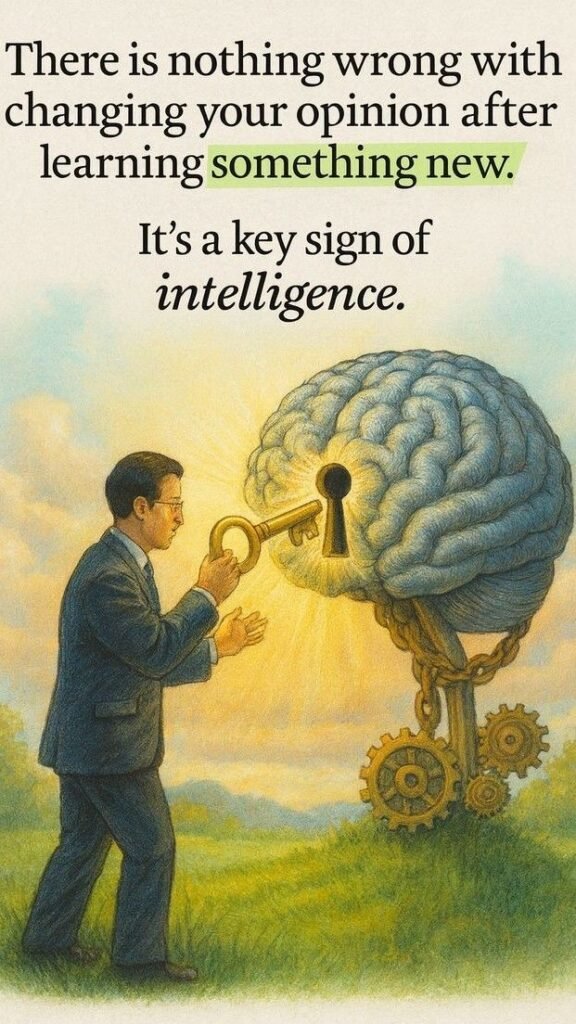
In a world that often rewards stubborn certainty, changing your can feel like admitting defeat. Society frequently mistakes rigid consistency for strength, labeling those who update their views as indecisive or hypocritical. However, psychological research and cognitive reveal the exact opposite: the willingness to revise your beliefs in light of new evidence is one of the highest indicators of intellectual maturity and mental agility.
Opinion& Commentary
Refusing to adapt when presented with fresh facts traps individuals in outdated mindsets, leading to flawed decision-making across personal relationships, career advancement, and personal choices.
Embracing intellectual flexibility expands your understanding, sharpens critical thinking, and helps you navigate an increasingly complex world with confidence.
1. The Cognitive Trap of Stubborn Consistency
The human brain is naturally wired to conserve energy and protect its ego. Once we form an opinion, cognitive biases go to work to protect that belief at all costs.
When you treat your opinions as fixed identities rather than flexible hypotheses, new evidence feels like a personal threat rather than valuable insight.
Common Mental Obstacles to Updating Your Mind
- Confirmation Bias: Actively seeking out information that supports your existing belief while ignoring or discounting opposing data. Reference
- Sunk Cost Fallacy: Holding onto an opinion or strategy simply because you have invested years, emotional energy, or money into defending it.
- Belief Perseverance: The psychological tendency to maintain a core conviction even after the original evidence supporting it has been thoroughly disproven.
       [ Rigid Belief System ]  --> Ignores New Data  --> Stagnation & Mistakes
       [ Flexible Mindset ]    --> Absorbs New Facts --> Continuous Growth & Mastery
2. Intellectual Humility and High Emotional Intelligence
Changing your mind when presented with new facts requires intellectual humility—the recognition that your knowledge is limited and that you can always learn more. High-performing leaders, scientists, and successful investors do not view updating an opinion as a failure; they treat it as an essential upgrade to their mental models.