 Skip to content

Chinese Wisdom: To Understand the Road Ahead, Ask Those Coming Back
Inspirational quote graphics that combine classic proverbs with vintage book-style illustrations capture great attention on social media. By offering practical counsel on mentorship, guidance, and wisdom, these posts spark thoughtful reflection on who we choose to listen to when navigating life’s major decisions.
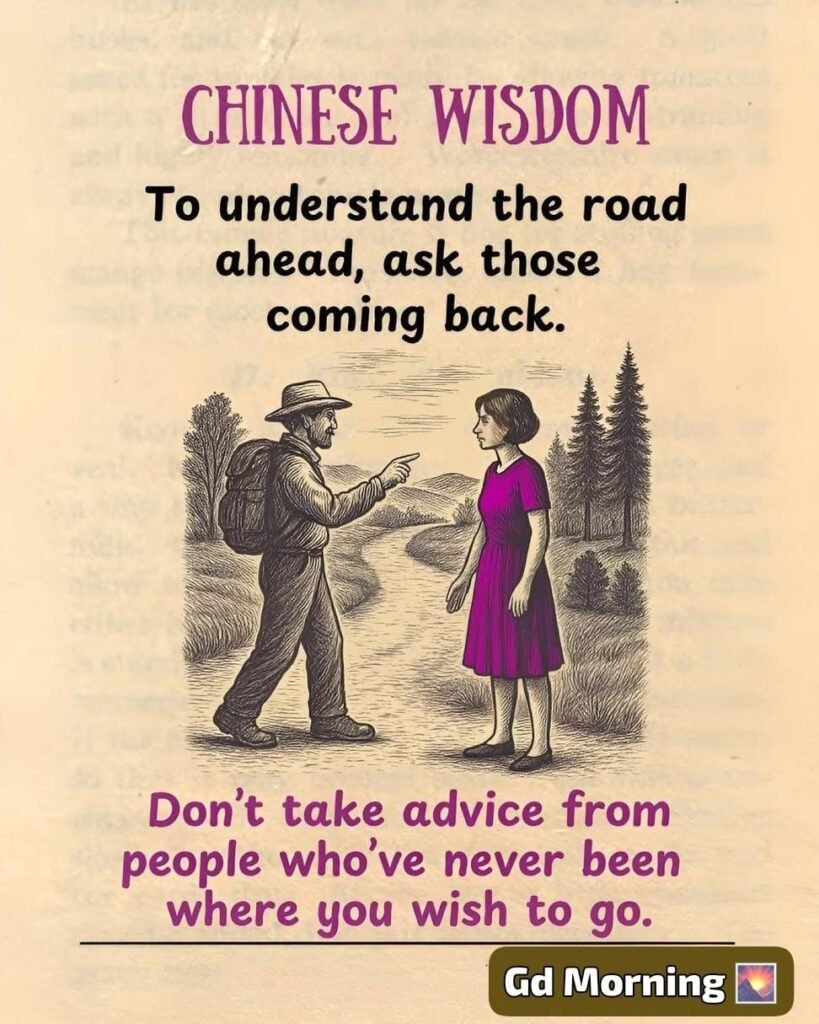
A vintage-style book illustration features a traveler with a backpack pointing the way for a woman on a winding path, accompanied by the quote:
CHINESE WISDOM
“To understand the road ahead, ask those coming back.”
“Don’t take advice from people who’ve never been where you wish to go.”
This traditional proverb highlights the immense value of mentorship and lived experience. When starting a new journey—whether in business, personal growth, or relationships—the most reliable directions come from those who have already walked the terrain.
In this guide, we break down the graphic’s visual metaphor, explore the philosophy of experiential wisdom, and share practical ways to select the right mentors in your life.
Breakdown of the Artwork & Visual Metaphor
The graphic uses classic storytelling imagery to represent the transfer of experiential knowledge:
                      [ VISUAL SYMBOLISM ANALYSIS ]
                                    |
      --------------------------------------------------------------
     |                              |                               |
  [ THE RETURNING TRAVELER ]    [ THE NEW JOURNEYMAN ]     [ THE WINDING PATH ]
 • Represents experience,      • Symbolizes ambition,      • Represents life's unknown
   lessons learned, & wisdom     curiosity, & next steps     challenges, risks, & outcomes
Key Symbolic Elements:
-
The Experienced Traveler (The Person Returning): Equipped with a backpack and hat, this figure represents someone who has already journeyed down the road, faced its obstacles, and gained firsthand experience.
-
The Listener (The Person Starting Out): Represents anyone embarking on a new path or facing a new challenge, in need of guidance from a trusted source.
-
The Winding Road: Symbolizes the uncertainty of future endeavors. Without guidance, the road can lead to unnecessary detours, pitfalls, or wasted effort.
Experiential Wisdom vs. Theoretical Advice
Selecting the right source of guidance is critical to reaching your destinations efficiently:
| Guidance Dimension | Experiential Wisdom (Those Coming Back) | Theoretical Advice (Unproven Sources) |
| Source of Insight | Personal trial, error, and actual execution | Speculative opinion, rumor, or theory |
| Depth of Knowledge | Understands hidden obstacles and nuances | Provides surface-level or generic advice |
| Risk Reduction | Warns against proven traps and pitfalls | May encourage misinformed or risky choices |
| Practical Value | Delivers actionable, battle-tested strategies | Offers well-meaning but untested ideas |
How to Choose the Right Mentors and Advisors
1. Filter Advice by Track Record
Before accepting guidance, evaluate whether the person giving it has successfully achieved what you are striving for. Seek advice from practitioners rather than spectators.
2. Learn from Mistakes as Much as Successes
Those “coming back” can share not only how to succeed, but also what mistakes to avoid. Understanding past failures helps you navigate obstacles with far greater foresight.
3. Seek Specific, Contextual Guidance
Ensure the person’s experience aligns with your specific goals and values. The best advice accounts for the unique circumstances of your current starting point.
Conclusion
The proverb “To understand the road ahead, ask those coming back” reminds us of the power of mentorship and lived experience. By seeking counsel from those who have already reached your target destination, you gain the clarity, confidence, and direction needed to navigate your own path.
Frequently Asked Questions (FAQ)
What is the origin of “To understand the road ahead, ask those coming back”?
This saying is a traditional Chinese proverb (问路才知平与陡, 问人才知善与恶 / 欲知山中事,须问打柴人) emphasizing the value of consulting experienced people before embarking on unfamiliar journeys.
Why shouldn’t you take advice from everyone?
Well-meaning individuals often give advice based on their own fears, assumptions, or limited knowledge. Accepting advice from people who haven’t accomplished your specific goals can lead to misdirection and doubt.