 Skip to content

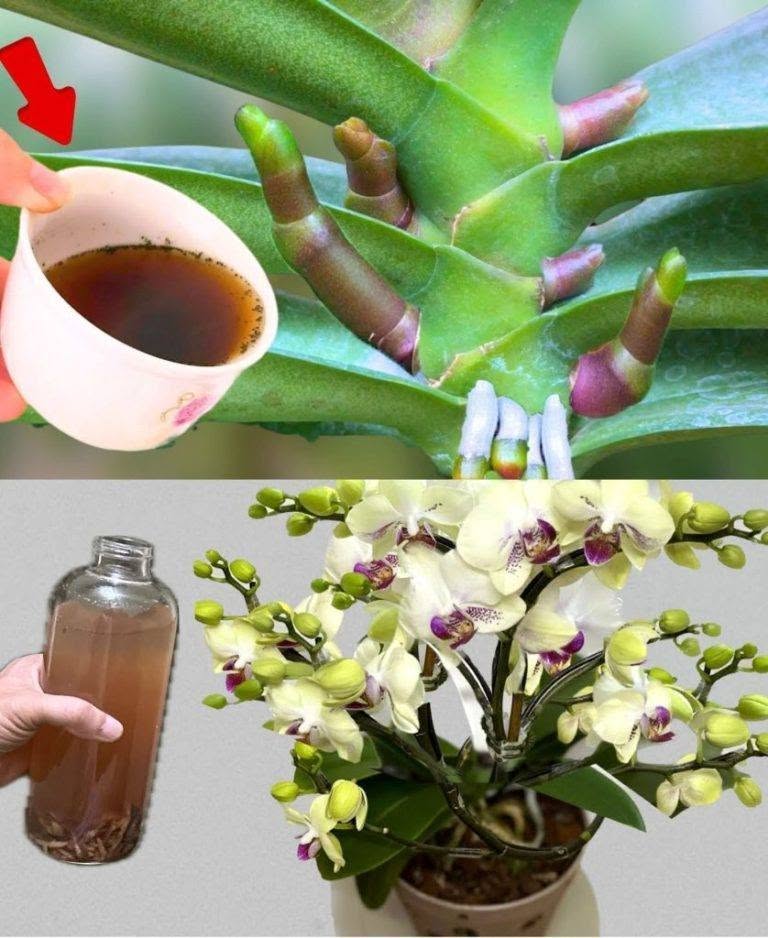

Phalaenopsis orchids are among the most beloved house plants, known for their stunning, long-lasting flowers and elegant green leaves. However, getting an orchid to rebloom after its original flowers fade can sometimes feel like a challenge for plant enthusiasts.
Social media graphics often showcase dramatic transformations—showing dark home-brewed tea mixtures poured onto orchids, resulting in dozens of new flower spikes and lush aerial roots. While home tea and organic infusions provide mild trace nutrients, getting an orchid to bloom vigorously relies on a complete approach combining light, temperature, watering, and proper feeding.
Below, we break down how natural home fertilizers work for orchids, clarify common orchid care myths, and share essential tips to keep your orchids blooming year after year.
Popular Organic Tea & Infusion Fertilizers for Orchids
Many household leftovers can be repurposed into mild, organic fertilizers that support orchid health:
1. Weak Black or Green Tea Infusion
-
Why It Works: Weakly brewed tea contains trace tannic acid and nitrogen, which slightly mimics the natural acid buildup orchids experience on tree bark in their native tropical habitats.
-
How to Use: Brew a cup of plain tea, dilute it with equal parts water until it resembles pale amber, and use it once a month during the active growing season.
2. Rice Water Fertilizer
-
Why It Works: Water saved after soaking or rinsing raw rice is rich in trace minerals like potassium, phosphorus, and vitamins that feed beneficial microbes in the orchid bark medium.
-
How to Use: Let un-salted rice water cool completely and apply it fresh as a root drench once every few weeks.
3. Banana Peel Water
-
Why It Works: Banana peels are rich in potassium and magnesium—two crucial minerals that encourage strong root development and help trigger flower bud formation.
-
How to Use: Steep fresh banana peels in water for 24 to 48 hours, strain the liquid, and dilute with clean water before watering your plant.
Addressing Viral Orchid Care Myths vs. Plant Science
Understanding what actually causes orchids to grow spikes and flower buds helps avoid damaging your plants:
-
The Myth: Pouring a miracle tea mixture will make an orchid sprout 10 new flower spikes overnight.
-
The Reality: Orchid spikes grow slowly over several months. While mild organic fertilizers provide gentle nutrient boosts, temperature drop (a night temperature drop of about $10^\circ\text{F}$ to $15^\circ\text{F}$) combined with bright, indirect sunlight is the actual biological trigger that causes a Phalaenopsis orchid to initiate a new flower spike.
4 Essential Rules for Triggering Orchid Reblooming
To encourage your orchid to produce healthy flower spikes year after year, follow these proven care habits:
1. Provide Plenty of Bright, Indirect Light
Place your orchid near an east-facing window or a shaded south/west window. The leaves should be a bright, grassy green tone. Deep dark green leaves mean the plant isn’t getting enough light to produce blooms.
2. Trigger Blooming with a Nighttime Temperature Drop
In the fall, expose your orchid to slightly cooler nighttime temperatures (around $55^\circ\text{F}$ to $65^\circ\text{F}$) for two to three weeks. This natural signal tells the plant it is time to set new flower buds!
3. Water Correctly (Allow Bark to Dry)
Overwatering is the number one killer of orchids. Water thoroughly only when the potted bark or moss medium has dried out completely and the roots turn a silvery-gray color. Active, hydrated roots turn a vibrant green!
4. Feed “Weakly, Weekly”
During the active growing season (spring and summer), use a balanced, water-soluble orchid fertilizer diluted to a quarter strength every time you water, skipping every fourth watering to flush out mineral salt buildup.
Fascinating Facts About Orchids
-
Epiphytes in Nature: In tropical rainforests, most popular houseplant orchids don’t grow in soil! They attach themselves to tree trunks and branches, gathering moisture and nutrients from rain, air, and decaying organic debris.
-
Microscopic Seeds: Orchid seeds are among the smallest in the world—a single seed pod can contain up to several million dust-like seeds!
Conclusion
Homemade organic tea infusions and banana peel waters are great, gentle ways to supplement your orchid’s nutrition. Combined with proper bright light, disciplined watering, and cooler night temperatures, your orchids will reward you with vibrant, long-lasting flowers!
Frequently Asked Questions (FAQ)
Can I use ice cubes to water my orchids?
While ice cubes are a popular marketing trend, placing ice directly on tropical roots can cause cold damage over time. It is generally better to water orchids with room-temperature water.
How do I tell the difference between a new root and a flower spike?
New roots have a rounded, glossy tip and grow in various directions (often downward or outward). Flower spikes typically have a flatter, mitten-shaped tip and grow upward toward the light source.
How long do Phalaenopsis orchid blooms last?
When kept in optimal conditions out of direct heat blasts or drafts, Phalaenopsis orchid flowers can remain open and beautiful for 2 to 3 months!