 Skip to content

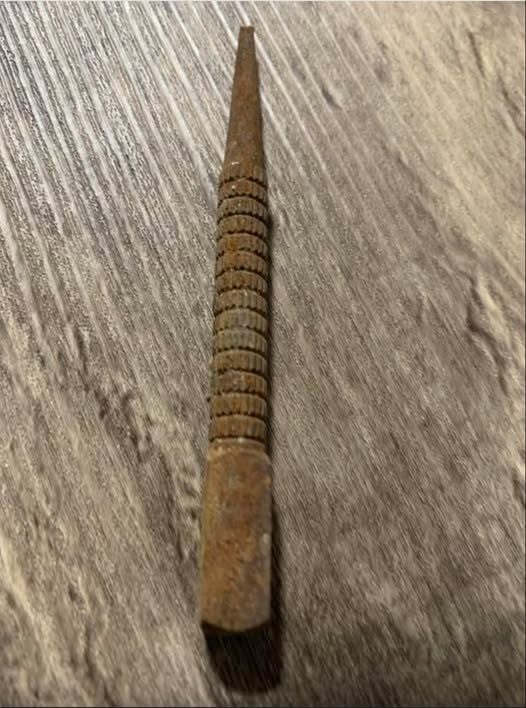

Cleaning out an old workbench, tool chest, or shed often uncovers mysterious metal artifacts coated in decades of surface rust. Among the most common discoveries are slim, ridged steel rods featuring tapered ends and flat striking heads.
While at first glance this tool might look like a giant stylus, dart barrel, or scribe, it is actually a vintage nail set (nail punch) or metalworking center punch.
Below, we break down what this tool is used for, how to identify its key design elements, and step-by-step instructions for safely removing heavy rust to restore antique shop tools to working condition.
What Is This Tool? Identifying the Features
This tool is a classic example of traditional high-carbon steel workshop hardware designed for heavy-duty striking and precision marking:
1. The Flat Striking Head (Bottom Base)
The wide, flattened base serves as the target area for a hammer blow. Over years of heavy use, these striking heads often develop a slightly flared or “mushroomed” rim from repeated impact.
2. The Knurled / Ridged Grip Body
The textured, ridged rings along the center shank are known as knurling. This pattern provides a non-slip grip for fingers, preventing the punch from twisting or slipping while held under precise tension.
3. The Tapered Tip
-
Nail Sets: Feature a slightly cupped or concave tip designed to sit flush over the head of a finish nail without slipping off.
-
Center Punches: Feature a sharpened conical point used to punch a small dimple into wood or metal, preventing drill bits from wandering when starting a hole.
How to Restore Rusty Vintage Hand Tools at Home
Restoring rusted hand tools is a deeply satisfying DIY project that brings historical craftsmanship back to life.
Tools & Materials Needed:
-
White distilled vinegar or commercial rust converter
-
Wire brush or fine steel wool (0000 grade)
-
Baking soda and warm water (for neutralizing acid)
-
Light machine oil or paste wax (for rust protection)
Step-by-Step Restoration Process:
-
The Vinegar Bath: Submerge the rusty tool in a plastic jar filled with white vinegar for 12 to 24 hours. The mild acetic acid dissolves iron oxide (rust) without damaging the high-carbon steel underneath.
-
Scrub Away Debris: Remove the tool from the bath and scrub the loosened rust using a stiff wire brush or brass wire wheel, paying special attention to the knurled ridges where grime collects.
-
Neutralize the Acid: Rinse the tool immediately in a solution of warm water and 2 tablespoons of baking soda to stop the acidic reaction and prevent “flash rust.”
-
Dry Thoroughly: Wipe the metal completely dry with a clean shop towel or use a hairdryer to remove all surface moisture.
-
Apply Protective Oil: Rub a thin coat of mineral oil, 3-In-One oil, or paste wax into the steel to seal the pores and protect against future corrosion.
Essential Workshop Uses for Nail Sets and Punches
-
Setting Finish Nails: Sinks small finishing nails slightly below the wood surface so the resulting hole can be covered seamlessly with wood filler before painting or staining.
-
Accurate Hole Drilling: Creating a starter indentation in sheet metal or hardwoods ensures drill bits lock onto the exact center point.
-
Driving Out Hinge Pins: Used alongside a hammer to gently tap out stuck door hinge pins during home maintenance.
Fascinating Facts About Vintage Tool Design
-
Why Knurling Matters: Knurling was originally performed on manual engine lathes using hardened steel wheels to press raised diamond or straight ridge patterns into round stock.
-
Built to Last Generations: Unlike modern cast-alloy budget tools, early-to-mid 20th-century punches were drop-forged from solid high-carbon tool steel, allowing them to endure decades of direct hammer impacts without fracturing.
Conclusion
Finding a vintage tool covered in rust isn’t the end of its life—it’s just the beginning of a restoration project! With a simple vinegar soak and light wire brushing, old nail sets and center punches can easily be restored to serve reliably in your workshop for decades to come.
Frequently Asked Questions (FAQ)
What is the difference between a nail set and a center punch?
A nail set has a slightly cupped or flat tip designed to seat nails below wood surfaces without slipping. A center punch has a sharp, pointed conical tip designed to indent metal or wood prior to drilling.
How do you stop restored steel tools from rusting again?
Keep restored tools lightly oiled with machine oil or apply a thin coat of paste wax. Storing tools with silica gel packets or in a climate-controlled area also prevents moisture buildup.
Will vinegar damage vintage steel tools?
Short-term soaking (12 to 24 hours) in household white vinegar is safe for solid steel tools. Always neutralize the acid with a baking soda water rinse immediately after removing the tool from the bath.