 Skip to content

Karma: You Get What You Give – The Visual Lesson Explained
Inspirational memes, philosophical illustrations, and conceptual artwork frequently go viral across social media because they condense complex moral ideas into simple, striking visuals.
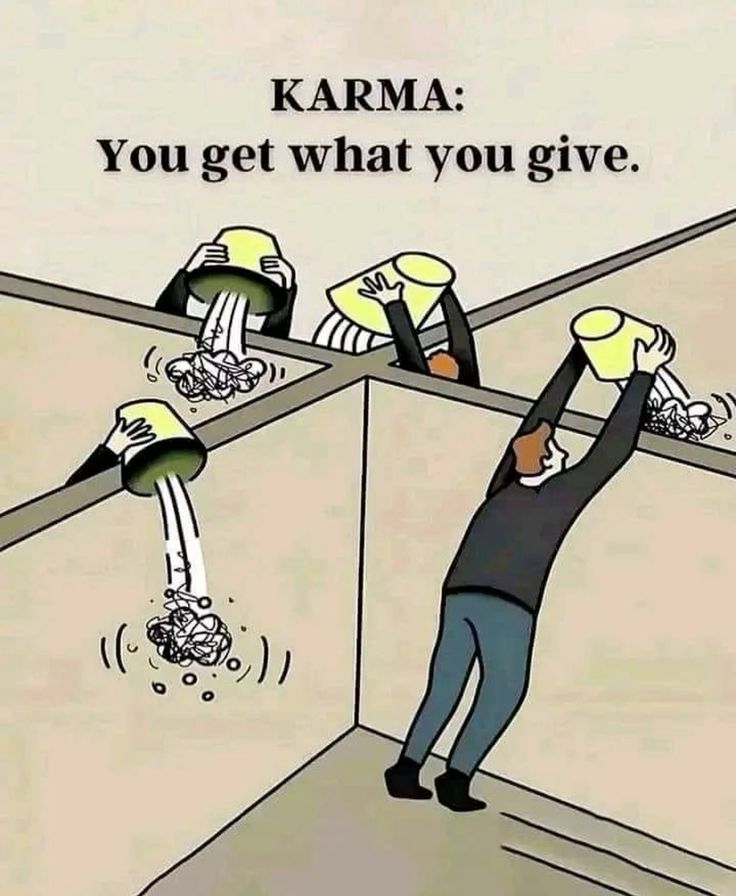
A widely shared conceptual illustration features four individuals separated by high walls, under the title:
“KARMA: You get what you give.”
In the visual, each person reaches over the dividing wall to dump a bucket of trash into the adjacent section. Because the walls form a closed circular loop, the negativity or waste each person throws out ends up landing directly into their own space from the neighbor behind them.
In this guide, we break down the symbolism behind this powerful illustration, explore the psychology of cause and effect, compare philosophical interpretations of karma, and share practical ways to build positive cycles in daily life.
Deconstructing the Image: The Circular Loop of Actions
What makes this visual metaphor so resonant and easy to understand?
         [ Person A ]  ==dumps trash into==>  [ Person B ]
              ^                                   |
              |                                   v
         [ Person D ]  <==dumps trash into==  [ Person C ]
1. The Closed System
The illustration places four people in isolated, walled compartments connected in a continuous circle. This setup represents a closed social environment, community, or ecosystem where actions cannot be isolated from their environment.
2. The Illusion of Separation
Each person believes they are simply dumping their waste onto someone else (“getting rid of it”), unaware that everyone else in the loop is doing the exact same thing. The high walls symbolize how isolated thinking leads people to ignore the long-term consequences of their actions.
3. The Return Effect
Because the chain is interconnected, the harmful energy, criticism, or trash poured into the system travels full circle. Ultimately, what you dump out returns directly back onto you.
Comparing Conceptual Perspectives on Karma
While the word karma originates from ancient Eastern philosophy, the underlying principle of reciprocity exists across almost every culture:
| Tradition / Concept | Core Principle | Philosophical View |
| Eastern Philosophy (Karma) | Cause and effect (Kamma) | Intentional actions shape future experiences and outcomes. |
| Golden Rule (Western Ethics) | “Do unto others as you would have them do unto you.” | Treating others well creates a healthier moral community. |
| Physics / Systems Theory | Action and Reaction | In closed networks, energy output directly influences network input. |
| Popular Culture Meme | “What goes around comes around.” | Practical social observation on how negativity breeds negativity. |
The Psychology of Social Reciprocity
Why do negative or positive behaviors create self-fulfilling loops in human relationships?
1. Emotional Contagion
Attitudes and behaviors are infectious. When an individual project bitterness, hostility, or negativity into a group or workplace, others respond in kind, creating a toxic feedback loop.
2. The Reciprocity Norm
Human social behavior is heavily governed by reciprocity. When you extend kindness, support, and constructive energy, people naturally incline toward treating you with similar respect.
Practical Ways to Break the Negative Cycle
If you want to transform a negative loop into a positive feedback cycle, consider these practical strategies:
-
Be the Circuit Breaker: When negativity comes over your “wall,” choose not to pass it forward to the next person. Pause and respond with calm instead of reacting with hostility.
-
Change What You Fill Your Bucket With: Practice pouring support, encouragement, and kindness over the wall rather than complaints or toxicity.
-
Recognize Interconnectedness: Remind yourself that your personal choices impact the overall climate of your workplace, family, and online community.
Conclusion
The “Karma: You get what you give” visual illustration serves as a clear, impactful reminder of how our actions circulate. By realizing that we are all part of an interconnected loop, we can choose to put positivity into the world—knowing that what goes around ultimately comes around!
Frequently Asked Questions (FAQ)
What is the main message of the karma illustration?
The illustration shows that throwing negativity or harm at others creates a cycle that ultimately returns to harm you.
What does the term “karma” literally mean?
Originating from Sanskrit, karma translates literally to “action” or “deed,” referring to the principle of cause and effect.
How can you apply this concept in everyday life?
You can practice it by treating others with empathy and respect, stopping gossip, and actively contributing positive energy to your environment.