 Skip to content


How Many Fruits Are in This Post? The Viral Culinary vs. Botanical Puzzle Solved
Viral trivia games and riddle graphics regularly go viral on social media by challenging our everyday assumptions.
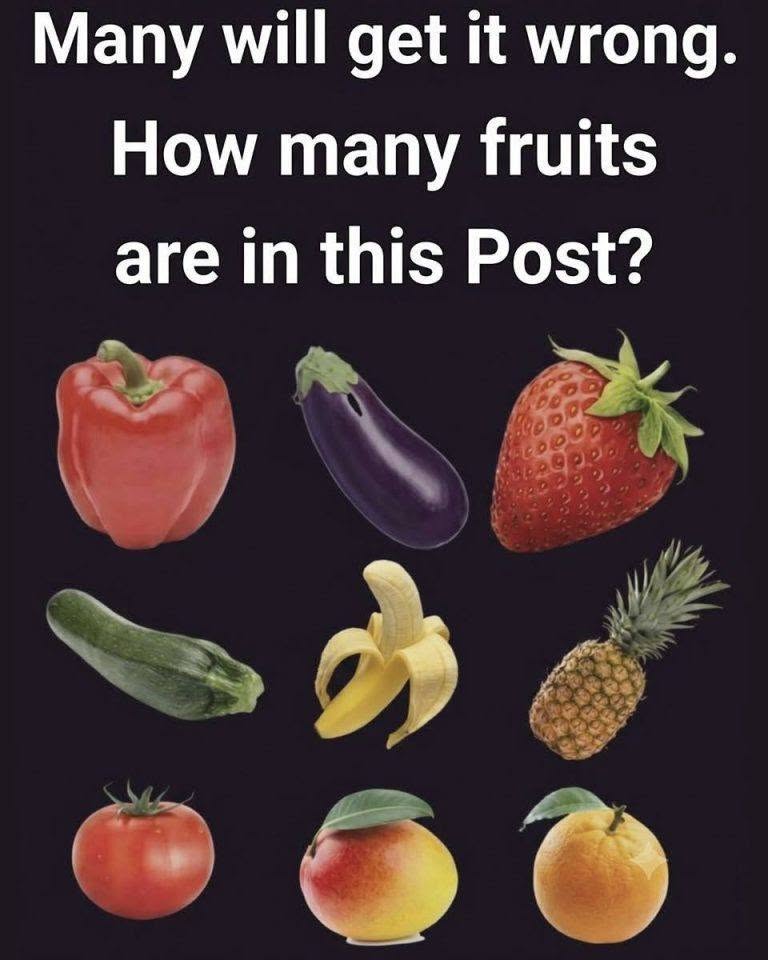
In this popular visual challenge, nine foods are shown in a 3×3 grid below the prompt: “Many will get it wrong. How many fruits are in this Post?”
While most people count the obvious sweet items and separate out the “vegetables,” botanically speaking, every single item pictured in the image is actually a fruit!
Below, we break down each of the nine items, explain the science of what makes a fruit, and highlight the difference between culinary definitions and botanical facts.
The Botanical Definition of a Fruit
In botany, a fruit is defined as the seed-bearing structure that develops from the ovary of a flowering plant after fertilization.
By contrast, true vegetables consist of other edible plant parts, such as roots (carrots), stems (celery), leaves (lettuce), or flower buds (broccoli).
Because all nine items in the image contain seeds (or seed structures) and grow from the flowers of their respective plants, all 9 are botanically classified as fruits!
Detailed Item-by-Item Breakdown
Let’s analyze all nine foods displayed in the grid from top-left to bottom-right:
-
Red Bell Pepper: Botanical Fruit. Bell peppers develop from a flower and contain internal seeds. Botanically, peppers are classified as berries!
-
Eggplant (Aubergine): Botanical Fruit. Eggplants grow from flowering nightshade plants and contain internal seeds, making them true botanical berries.
-
Strawberry: Botanical Fruit. While technically an “aggregate accessory fruit” (where the red flesh is enlarged receptacle tissue holding tiny seed-like achenes), it is universally categorized under fruits.
-
Zucchini (Courgette): Botanical Fruit. Like squash and cucumbers, zucchini develops from a yellow blossom and houses seeds in its center (specifically a type of berry called a pepo).
-
Banana: Botanical Fruit. Bananas grow from flowering plants and are scientifically classified as soft, fleshy berries.
-
Pineapple: Botanical Fruit. Pineapples are a “multiple fruit,” formed by a cluster of individual flowers whose berries fuse together around a central core.
-
Tomato: Botanical Fruit. A classic example of a fruit often mistaken for a vegetable, tomatoes are botanically fleshy berries.
-
Mango: Botanical Fruit. Mangoes are stone fruits (drupes) with a fleshy exterior surrounding a single central pit/seed.
-
Orange: Botanical Fruit. Oranges are a specialized type of modified berry known as a hesperidium, featuring a leathery rind and juicy segmented flesh.
Botanical Classification vs. Culinary Use
The confusion in this riddle comes down to how chefs and grocers categorize food compared to botanists:
| Food Item | Culinary Category | Botanical Category | Why It Is Botanically a Fruit |
| Red Bell Pepper | Vegetable | Fruit (Berry) | Grows from a flower and contains internal seeds |
| Eggplant | Vegetable | Fruit (Berry) | Develops from a blossom and houses seeds |
| Strawberry | Fruit | Aggregate Accessory Fruit | Holds seed-bearing achenes on exterior tissue |
| Zucchini | Vegetable | Fruit (Pepo) | Grows from a flower and contains seeds |
| Banana | Fruit | Fruit (Berry) | Fleshy fruit growing from a single ovary |
| Pineapple | Fruit | Multiple Fruit | Fusion of multiple individual floral berries |
| Tomato | Vegetable | Fruit (Berry) | Classic seed-bearing floral output |
| Mango | Fruit | Fruit (Drupe) | Fleshy stone fruit surrounding a seed pit |
| Orange | Fruit | Fruit (Hesperidium) | Segmented berry with a tough peel and seeds |
The Answer Key
-
Botanical Answer: 9 Fruits (Every single item pictured develops from a flower and contains seeds).
-
Culinary Answer: 5 Fruits (Strawberry, Banana, Pineapple, Mango, Orange) and 4 Culinary Vegetables (Pepper, Eggplant, Zucchini, Tomato).
Conclusion
Next time you hear the old phrase “Knowledge is knowing a tomato is a fruit; wisdom is not putting it in a fruit salad,” remember that peppers, zucchini, and eggplants belong in the exact same club! Whether you count by culinary tradition or scientific botanical facts, this brain teaser is a fun reminder of how fascinating nature really is.
Frequently Asked Questions (FAQ)
What is the strict legal definition of a tomato?
In 1893, the U.S. Supreme Court ruled in Nix v. Hedden that tomatoes should be classified as vegetables for customs tariff purposes based on how they are cooked and served, even while acknowledging their botanical fruit status!
Are cucumbers and squashes fruits too?
Yes! Just like zucchini and peppers, cucumbers, pumpkins, and squashes all grow from flowers and enclose seeds, making them true botanical fruits.