 Skip to content


Lower back discomfort affects millions of people daily, often stemming from prolonged sitting, tight hip flexors, poor posture, or weak core stability. Incorporating gentle, daily mobility work into your routine helps decompress the spine, stretch tight glute and piriformis muscles, and encourage blood flow to surrounding supportive tissues.
While severe or chronic back pain requires professional evaluation from a physical therapist or medical specialist, these 4 targeted stretches offer quick, safe, and effective relief for everyday muscular stiffness!
Below, we break down the 4 best stretches for lower back relief, complete with step-by-step instructions and key tips.
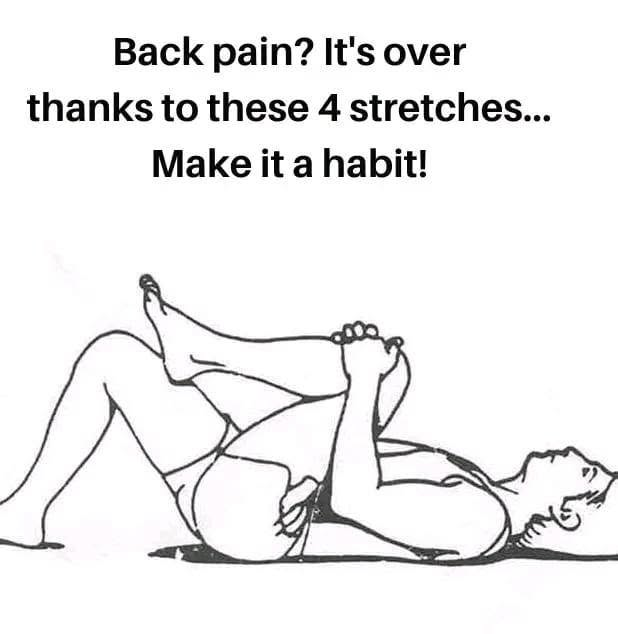
1. Single Knee-to-Chest Stretch (As Shown)
This foundational stretch targets the lower back muscles (erector spinae) and glutes while gently decompressing the lumbar spine.
How to do it:
-
Lie flat on your back on a comfortable mat or carpet with both knees bent and feet flat on the floor.
-
Slowly lift one knee toward your chest, clasping both hands firmly behind your thigh or across your shin.
-
Gently pull the knee closer to your torso until you feel a comfortable stretch in your lower back and hip.
-
Hold for 20 to 30 seconds, breathing deeply. Lower slowly and repeat on the opposite leg.
2. Reclined Figure-Four Stretch (Piriformis & Glute Release)
Tight piriformis and gluteal muscles often pull on the pelvis, creating referred stiffness and pressure in the lumbar region.
How to do it:
-
Lie on your back with knees bent and feet flat on the floor.
-
Cross your right ankle over your left knee, creating a “figure-four” shape.
-
Thread your hands around your left thigh and gently pull your left leg toward your chest until you feel a deep stretch in your right glute.
-
Hold for 20 to 30 seconds, then switch sides.
3. Cat-Cow Stretch (Spinal Mobility)
This gentle, dynamic flow warms up the spine, improves fluid movement between vertebrae, and releases tension throughout the upper and lower back.
How to do it:
-
Begin on all fours (hands under shoulders, knees under hips) in a tabletop position.
-
Inhale (Cow): Arch your back downward, drop your belly toward the floor, and gently lift your head and tailbone.
-
Exhale (Cat): Round your spine upward toward the ceiling, tucking your chin to your chest and pulling your belly button toward your spine.
-
Repeat this smooth flow slowly for 8 to 10 full breaths.
4. Child’s Pose (Lumbar Decompression)
A classic restorative pose that gently lengthens the spine, stretches the lats, and relaxes the lower back.
How to do it:
-
Kneel on the floor with your big toes touching and knees wide apart.
-
Lower your hips back onto your heels as you extend your arms forward on the floor.
-
Rest your forehead gently on the mat and allow your chest to sink toward the ground.
-
Breathe deeply into your lower back for 30 to 60 seconds.
3 Pro-Tips for Safe Back Stretching
-
Never Force a Stretch: You should feel a smooth, gentle pull—never sharp or stabbing pain.
-
Breathe Rhythmically: Inhale slowly through your nose and exhale deeply through your mouth during each hold to encourage muscle relaxation.
-
Pair Stretches with Core Building: Once back tension drops, add gentle core-strengthening exercises (like bird-dogs or glute bridges) to stabilize your spine long-term!
Conclusion
Making these four simple stretches a daily habit takes less than 5 minutes and makes a world of difference in keeping your spine supple, mobile, and comfortable. Treat your back to a gentle daily stretch and enjoy better movement every day!
Frequently Asked Questions (FAQ)
How often should I do these lower back stretches?
Doing these stretches 1 to 2 times daily (especially in the morning or after sitting for extended periods) is completely safe and delivers the best results for joint mobility.
When should I see a doctor for back pain?
Consult a healthcare professional if your back pain is severe, constant, accompanied by numbness/tingling down the legs, or persists for more than two weeks without improvement.